About
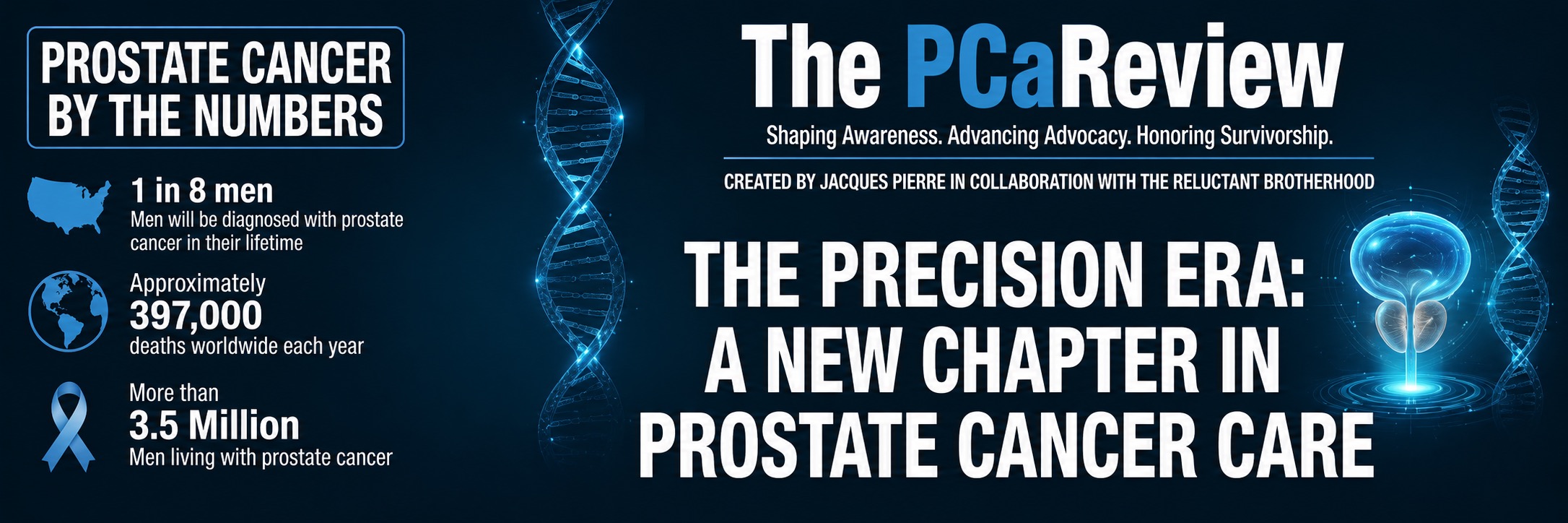
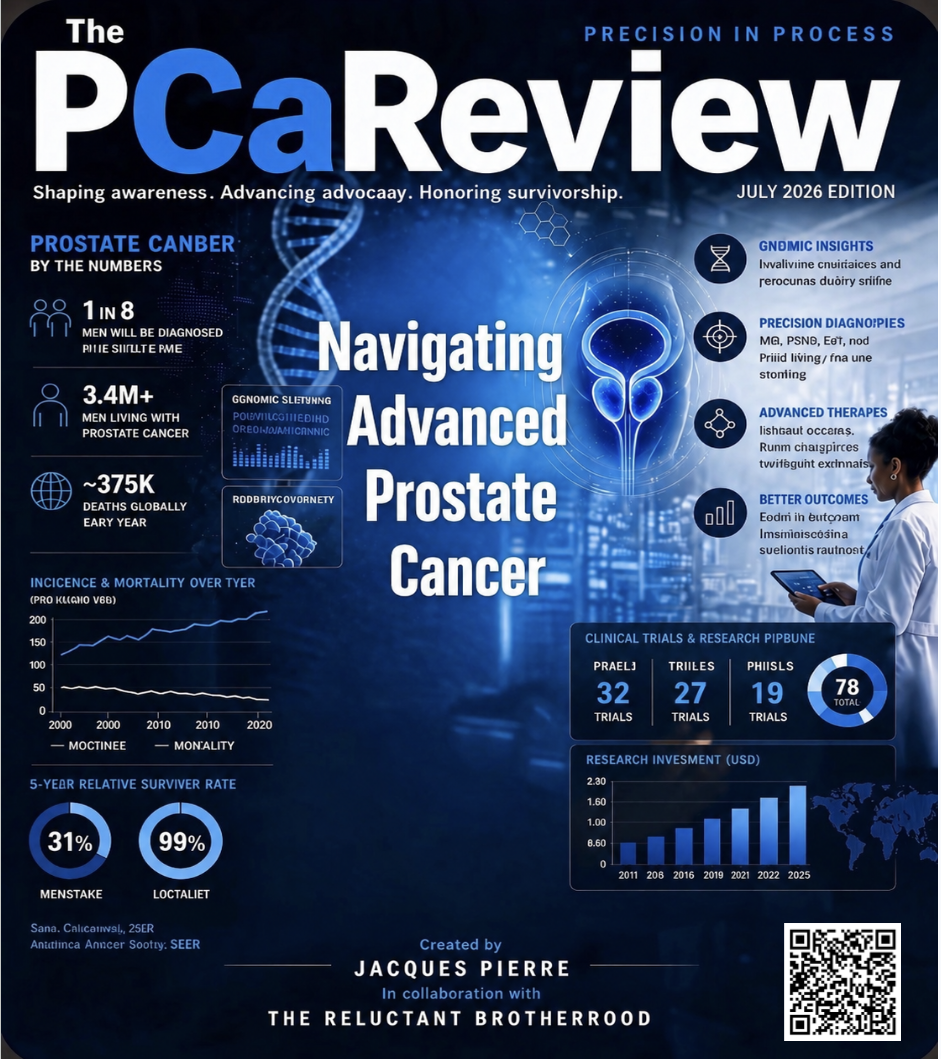
PCaReview: Precision in Progress is a monthly, research-driven publication focused on advancing understanding of prostate cancer care through evidence-based education, clinical insights, survivorship guidance, and patient-centered information.
Designed for patients, survivors, caregivers, and healthcare readers, the magazine highlights current developments in prostate cancer diagnosis, treatment, management, and ongoing research.
This publication is intended for informational and educational purposes only and is not a substitute for professional medical advice, diagnosis, or treatment.
© 2026 All Rights Reserved
No part of this publication may be reproduced, distributed, or transmitted in any form without prior written permission from the publisher, except for brief quotations used in reviews, commentary, or educational reference.
Editor-in-Chief: Jacques Pierre
Edition: July 2026
Contributor Notice
Unless otherwise stated, all articles, photographs, illustrations, and visual materials are the property of their respective creators and are used under license or agreement.
Trademarks
All trademarks, logos, and brand names are the property of their respective owners.
Table of Contents
Main Feature Article: Advanced Prostate Cancer Treatment and Supportive Care
Introduction
Understanding Modern Prostate Cancer Treatment
Core Systemic Treatment Classes
- Hormonal Therapy (Androgen Deprivation Therapy)
- Chemotherapy
- Immunotherapy
- Targeted Therapy
- Radiopharmaceutical Therapy
- Recent FDA Approvals and Treatment Advances
Current Research and Emerging Evidence
Quality of Life Considerations
Shared Decision-Making in Advanced Prostate Cancer
Nutrition and Lifestyle Considerations
Conclusion
References
Advanced Prostate Cancer Treatment and Supportive Care: Precision Oncology in Practice
Prostate cancer remains one of the most commonly diagnosed cancers among men worldwide. While many cases are detected early and managed successfully, advanced prostate cancer continues to present significant challenges for patients, families, and healthcare teams. Fortunately, the treatment landscape has changed dramatically over the past decade.
Modern prostate cancer care has moved beyond traditional hormone therapy alone. Today, treatment may include precision medicine approaches, targeted therapies, immunotherapy, radiopharmaceuticals, and advanced imaging technologies. Increasingly, treatment decisions are guided by genetic testing, tumor biomarkers, and individualized patient factors.
This evolution has transformed outcomes for many patients with metastatic disease. New therapies are extending survival, delaying disease progression, and improving quality of life. At the same time, managing treatment-related side effects and maintaining overall health have become essential parts of comprehensive care.
For patients and caregivers, understanding these treatment options can feel overwhelming. This article reviews current standards of care, emerging research, supportive care strategies, and practical considerations that can help patients participate actively in treatment decisions.
What This Means for You
Modern prostate cancer treatment is becoming more personalized than ever before. The right treatment depends on disease stage, prior therapies, genetic findings, overall health, and personal treatment goals.
What to Ask Your Doctor
- What stage is my prostate cancer?
- Is my disease hormone-sensitive or castration-resistant?
- Should I undergo genetic testing?
- What treatment options are available for my specific situation?
- What side effects should I expect?
Learn More:
https://www.cancer.gov/types/prostate
Understanding Modern Prostate Cancer Treatment
Advanced prostate cancer is no longer viewed as a single disease. Clinicians now recognize multiple biological subtypes, each responding differently to therapy.
Important categories include:
- Localized prostate cancer
- Biochemically recurrent prostate cancer
- Metastatic hormone-sensitive prostate cancer (mHSPC)
- Metastatic castration-resistant prostate cancer (mCRPC)
The backbone of treatment remains androgen deprivation therapy (ADT), which lowers testosterone levels. However, modern treatment frequently combines ADT with additional therapies to improve outcomes.
Current guidelines increasingly support treatment intensification through combinations of:
- ADT plus androgen receptor inhibitors
- ADT plus chemotherapy
- ADT plus targeted therapies
- ADT plus radiopharmaceutical approaches in selected patients
Genetic testing has also become a major component of care. Identification of mutations such as BRCA1, BRCA2, ATM, and other homologous recombination repair (HRR) genes can influence treatment selection and provide important information for family members.
Precision oncology aims to match therapies to the biological characteristics of individual tumors rather than relying solely on disease stage.
What This Means for You
Testing and biomarkers increasingly guide treatment decisions. Two patients with seemingly similar cancers may receive different therapies based on genetic findings or tumor characteristics.
What to Ask Your Doctor
- Should I have germline genetic testing?
- Should my tumor undergo genomic testing?
- Do I qualify for precision medicine treatments?
- How will my biomarker results influence treatment decisions?
Learn More:
https://www.pcf.org/patient-resources/
Core Systemic Treatment Classes: Hormonal Therapy (Androgen Deprivation Therapy)
Hormonal therapy remains the foundation of advanced prostate cancer treatment. Prostate cancer cells often depend on androgens, primarily testosterone, for growth and survival.
GnRH Agonists
These medications reduce testosterone production after an initial stimulation phase:
- Leuprolide
- Goserelin
- Triptorelin
- Histrelin
A temporary testosterone surge, known as a flare, can occur during treatment initiation.
GnRH Antagonists
These agents suppress testosterone immediately without flare:
- Degarelix
- Relugolix
Rapid suppression can be particularly important for patients with symptomatic metastatic disease.
CYP17 Inhibitors
Abiraterone acetate blocks androgen production throughout the body, including adrenal glands and tumor tissue.
Because it affects mineralocorticoid pathways, prednisone is administered alongside treatment.
Androgen Receptor Inhibitors
These therapies block androgen signaling within cancer cells:
- Enzalutamide
- Apalutamide
- Darolutamide
- Bicalutamide
- Flutamide
- Nilutamide
Darolutamide may produce fewer central nervous system effects because it has lower penetration across the blood-brain barrier.
Long-Term Effects of ADT
Hormone suppression can contribute to:
- Hot flashes
- Fatigue
- Loss of muscle mass
- Sexual dysfunction
- Mood changes
- Cognitive changes
- Weight gain
- Diabetes risk
- Cardiovascular risk
Pharmacology in Practice
Clinicians often combine multiple androgen pathway treatments to suppress testosterone production and block receptor activation simultaneously. This layered approach may delay resistance and improve long-term outcomes.
What This Means for You
Hormonal therapy remains one of the most effective prostate cancer treatments. However, side effects can affect many aspects of health and should be monitored carefully.
What to Ask Your Doctor
- Which hormonal therapy is most appropriate for me?
- What side effects should I expect?
- How will we monitor cardiovascular and metabolic health?
- Would a GnRH antagonist offer advantages in my case?
Learn More:
https://www.cancer.org/cancer/types/prostate-cancer/treating/hormone-therapy.html
Chemotherapy
Chemotherapy remains an important option for advanced and metastatic disease.
Docetaxel
Docetaxel is commonly used:
- In metastatic hormone-sensitive disease
- In metastatic castration-resistant disease
Clinical studies have demonstrated survival benefits when used early in selected patients.
Cabazitaxel
Cabazitaxel may be used when disease progresses after docetaxel.
Less Common Agents
- Mitoxantrone
- Estramustine
Common Side Effects
- Fatigue
- Neuropathy
- Hair loss
- Infection risk
- Low blood counts
- Nausea
What This Means for You
Chemotherapy can provide meaningful disease control but requires careful management of side effects and infection risks.
What to Ask Your Doctor
- Is chemotherapy appropriate for my disease stage?
- What benefits can I reasonably expect?
- How will side effects be managed?
Learn More:
https://www.mskcc.org/cancer-care/types/prostate
Immunotherapy
Immunotherapy harnesses the body's immune system to recognize and attack cancer cells.
Sipuleucel-T
Sipuleucel-T is a personalized cellular immunotherapy approved for selected men with metastatic castration-resistant prostate cancer.
Immune Checkpoint Inhibitors
Some patients benefit from:
- Pembrolizumab
- Dostarlimab
These therapies are generally reserved for tumors with specific biomarkers, including:
- Microsatellite instability-high (MSI-H)
- Mismatch repair deficiency (dMMR)
Current Limitations
Unlike melanoma or lung cancer, prostate cancer generally responds less frequently to immunotherapy. Careful patient selection is essential.
What This Means for You
Immunotherapy can be highly effective in a subset of patients whose tumors possess certain molecular features.
What to Ask Your Doctor
- Has my tumor been tested for MSI-H or dMMR?
- Am I a candidate for immunotherapy?
- What benefits and risks should I understand?
Learn More:
https://www.cancer.gov/about-cancer/treatment/types/immunotherapy
Targeted Therapy
Targeted therapies focus on specific molecular abnormalities within cancer cells.
PARP Inhibitors
Current therapies include:
- Olaparib
- Rucaparib
- Talazoparib
- Niraparib (in combination regimens)
These treatments are most effective in patients with DNA repair defects.
Synthetic Lethality
PARP inhibitors exploit vulnerabilities in tumors with defective homologous recombination repair pathways, particularly BRCA1 and BRCA2 mutations.
Cancer cells become unable to repair accumulated DNA damage, leading to cell death.
Importance of Genetic Testing
Both inherited and tumor-acquired mutations can influence eligibility for targeted treatment.
What This Means for You
Genetic testing may open access to highly effective precision medicine therapies.
What to Ask Your Doctor
- Have I been tested for BRCA mutations?
- Should I undergo germline and somatic testing?
- Am I eligible for PARP inhibitor therapy?
Learn More:
https://www.cancer.gov/news-events/cancer-currents-blog/2023/prostate-cancer-parp-inhibitors
Radiopharmaceutical Therapy
Radiopharmaceuticals deliver targeted radiation directly to cancer cells.
Radium-223
Radium-223 behaves similarly to calcium and localizes to areas of active bone turnover.
It is used for:
- Symptomatic bone-predominant metastatic castration-resistant prostate cancer
Benefits include:
- Pain reduction
- Improved quality of life
- Survival benefit in selected patients
Lutetium Lu 177 Vipivotide Tetraxetan (Pluvicto)
Pluvicto targets prostate-specific membrane antigen (PSMA).
Benefits include:
- Targeting both bone and soft tissue metastases
- Precision delivery of radiation
- Improved outcomes in appropriately selected patients
Key Difference
Radium-223 targets the bone environment.
Pluvicto targets PSMA-expressing tumor cells.
What This Means for You
Radiopharmaceuticals represent a rapidly growing area of precision oncology and may provide treatment options when other therapies have become less effective.
What to Ask Your Doctor
- Have I undergone PSMA PET imaging?
- Am I eligible for Pluvicto?
- Would Radium-223 benefit my disease pattern?
Learn More:
https://www.pcf.org/about-prostate-cancer/prostate-cancer-treatment/radiopharmaceuticals/
Recent FDA Approvals and Treatment Advances
Recent approvals continue to expand personalized treatment options.
Examples include:
Akeega
Niraparib plus abiraterone has expanded treatment opportunities for selected patients with BRCA-related disease.
Truqap-Based Combinations
Capivasertib-containing regimens represent emerging precision oncology approaches in biomarker-defined populations.
Intensified Hormonal Therapy
Research continues to demonstrate significant survival improvements when androgen receptor pathway inhibitors are added earlier in treatment.
The trend is clear:
- Earlier treatment intensification
- Greater use of biomarkers
- Combination therapy approaches
- Personalized medicine strategies
What This Means for You
The treatment landscape continues to evolve rapidly. New options may become available even after diagnosis.
What to Ask Your Doctor
- Have any newly approved therapies become relevant to my care?
- Should I consider clinical trial participation?
- How often should my treatment strategy be reassessed?
Learn More:
Current Research and Emerging Evidence
Research in prostate cancer is advancing at an unprecedented pace.
Major areas of investigation include:
Earlier Use of Radioligand Therapy
Studies continue to evaluate whether PSMA-targeted radiopharmaceuticals should move earlier into treatment pathways.
Combination Therapy
Researchers are exploring combinations involving:
- Hormonal therapies
- PARP inhibitors
- Immunotherapy
- Radioligand therapy
Biomarker Development
Scientists are seeking improved methods to predict:
- Treatment response
- Resistance mechanisms
- Long-term outcomes
Novel Immunotherapy Approaches
Emerging strategies include:
- Bispecific antibodies
- Cellular therapies
- Combination immune therapies
Areas of Uncertainty
Questions remain regarding:
- Optimal sequencing of treatments
- Long-term toxicities
- Cost-effectiveness
- Best biomarker selection strategies
Although early results are encouraging, many approaches remain investigational and require confirmation through larger studies.
What This Means for You
Today's standard treatment options were often yesterday's clinical trials. Participation in research may provide access to innovative therapies while helping future patients.
What to Ask Your Doctor
- Are clinical trials available for me?
- What studies are investigating treatments similar to mine?
- How might emerging research affect future decisions?
Learn More:
Quality of Life Considerations
Quality of life is increasingly recognized as a central treatment outcome.
Erectile Dysfunction
Erectile dysfunction is common following:
- Surgery
- Radiation
- Hormonal therapy
First-Line Treatment
PDE5 inhibitors include:
- Sildenafil
- Tadalafil
- Vardenafil
- Avanafil
Additional options include:
- Vacuum erection devices
- Penile injections
- Penile implants
Recovery may take months or years.
Urinary Incontinence
Management depends on symptom type.
Pharmacologic Options
- Anticholinergics
- Beta-3 agonists
- OnabotulinumtoxinA injections
Non-Drug Options
- Pelvic floor therapy
- Lifestyle modifications
- Continence products
Surgical Options
- Male sling
- Artificial urinary sphincter
Fatigue
Fatigue may result from:
- Cancer itself
- Hormonal therapy
- Chemotherapy
- Sleep disruption
- Anemia
- Emotional stress
Helpful interventions include:
- Exercise
- Sleep optimization
- Energy conservation strategies
- Evaluation of reversible causes
Emotional Health
Many patients experience:
- Anxiety
- Depression
- Uncertainty
- Relationship stress
Support groups, counseling, and survivorship programs can play important roles in comprehensive care.
What This Means for You
Cancer treatment is about more than survival. Managing symptoms and preserving quality of life are important treatment goals.
What to Ask Your Doctor
- What side effects should I expect?
- What rehabilitation services are available?
- How can I improve fatigue and sexual health?
Sample Questions
- Can I meet with a pelvic floor therapist?
- Should I see a sexual health specialist?
- Are there support groups available?
- How will we monitor long-term side effects?
Learn More:
Shared Decision-Making
Modern prostate cancer care increasingly emphasizes collaboration between patients and healthcare teams.
Shared decision-making involves:
- Understanding available options
- Discussing benefits and risks
- Considering personal values
- Aligning treatment with patient goals
Important factors include:
- Age
- Overall health
- Disease burden
- Family responsibilities
- Quality-of-life priorities
Genetic testing and biomarker analysis have further expanded opportunities for individualized treatment planning.
What This Means for You
Your preferences and goals matter. Effective treatment planning should incorporate both medical evidence and personal priorities.
What to Ask Your Doctor
- What are the goals of treatment?
- How will treatment affect daily life?
- Are there alternatives available?
Sample Questions
- What would you recommend and why?
- What are the most important risks?
- What happens if I choose a different option?
- How will success be measured?
Learn More:
https://www.cancer.gov/about-cancer/coping/adjusting-to-cancer/making-decisions
Nutrition and Lifestyle Considerations
Healthy lifestyle practices support overall health throughout the prostate cancer journey.
Mediterranean Diet
Research supports dietary patterns emphasizing:
- Fruits
- Vegetables
- Whole grains
- Fish
- Olive oil
- Nuts and legumes
Benefits
- Cardiovascular support
- Weight management
- Reduced inflammation
Exercise
Regular physical activity may help:
- Preserve muscle mass
- Reduce fatigue
- Improve mood
- Support bone health
- Improve metabolic health
Weight Management
Maintaining a healthy weight may reduce treatment complications and support long-term wellness.
Bone Health
Particularly important during ADT.
Strategies include:
- Weight-bearing exercise
- Calcium intake
- Vitamin D optimization
- Bone density monitoring
Cardiovascular Health
Long-term ADT can increase risks related to:
- Diabetes
- Hypertension
- Dyslipidemia
Routine monitoring is essential.
Sleep
Quality sleep supports:
- Immune function
- Energy levels
- Cognitive performance
- Emotional well-being
Newly Diagnosed
Focus on:
- Education
- Understanding treatment options
- Building a support network
What This Means for You
Learning about the disease can reduce uncertainty and improve decision-making.
What to Ask Your Doctor
- What additional tests do I need?
- What treatment options are available?
Active Surveillance
Focus on:
- Monitoring schedules
- Lifestyle optimization
- Reducing anxiety related to observation
What This Means for You
Active surveillance is an evidence-based management strategy for many low-risk cancers.
What to Ask Your Doctor
- What testing schedule should I follow?
During Treatment
Focus on:
- Nutrition
- Exercise
- Side effect management
- Mental health support
What This Means for You
Healthy habits can improve treatment tolerance and quality of life.
What to Ask Your Doctor
- What symptoms should I report immediately?
Advanced Disease
Focus on:
- Symptom management
- Functional independence
- Supportive care integration
What This Means for You
Supportive care can improve comfort and quality of life throughout treatment.
What to Ask Your Doctor
- Would palliative care services benefit me?
Survivorship
Focus on:
- Long-term monitoring
- Cardiovascular health
- Bone health
- Emotional well-being
What This Means for You
Life after treatment remains an important phase of care.
What to Ask Your Doctor
- What long-term follow-up plan should I follow?
Sample Questions
- Should I meet with a dietitian?
- How much exercise is recommended?
- Do I need bone density testing?
- How should my cardiovascular risk be monitored?
Learn More:
https://www.cancer.org/cancer/survivorship.html
Conclusion
The treatment landscape for advanced prostate cancer continues to evolve rapidly. Hormonal therapies remain the foundation of care, but targeted therapies, immunotherapy, radiopharmaceuticals, and biomarker-driven approaches are expanding opportunities for personalized treatment.
As precision oncology advances, genetic testing, PSMA imaging, and molecular profiling are increasingly guiding treatment decisions. At the same time, supportive care remains essential for preserving quality of life and addressing the physical, emotional, and social impacts of cancer.
Patients and caregivers play a critical role in treatment planning through informed discussions, shared decision-making, and active participation in care. Continued research, clinical trial participation, and evidence-based medicine will shape the next generation of prostate cancer treatment.
Additional Resources:
References
National Cancer Institute
https://www.cancer.gov/types/prostate
National Cancer Institute – Prostate Cancer Treatment (PDQ®)
https://www.cancer.gov/types/prostate/patient/prostate-treatment-pdq
National Institutes of Health
American Cancer Society – Prostate Cancer
https://www.cancer.org/cancer/types/prostate-cancer.html
Prostate Cancer Foundation
ZERO Prostate Cancer
Memorial Sloan Kettering Cancer Center
https://www.mskcc.org/cancer-care/types/prostate
Mayo Clinic – Prostate Cancer
https://www.mayoclinic.org/diseases-conditions/prostate-cancer
Johns Hopkins Medicine – Prostate Cancer
https://www.hopkinsmedicine.org/health/conditions-and-diseases/prostate-cancer
UCSF Health – Prostate Cancer Program
Cleveland Clinic – Prostate Cancer
https://my.clevelandclinic.org
ClinicalTrials.gov
European Association of Urology Guidelines
Cancer Research UK – Prostate Cancer
https://www.cancerresearchuk.org/about-cancer/prostate-cancer
Food and Drug Administration Oncology Center of Excellence
https://www.fda.gov/about-fda/oncology-center-excellence
National Comprehensive Cancer Network Patient Resources
Medical Disclaimer
This publication is intended for informational and educational purposes only and is not a substitute for professional medical advice, diagnosis, or treatment. Readers should consult qualified healthcare professionals regarding individual medical decisions, treatment options, and healthcare concerns.